ICoMCoS 2026 Workshop at Universitas Airlangga Explores the Role of AI in Data Analytics for Impactful Solutions
- September 10, 2026, 1:40 PM
- Writer : -
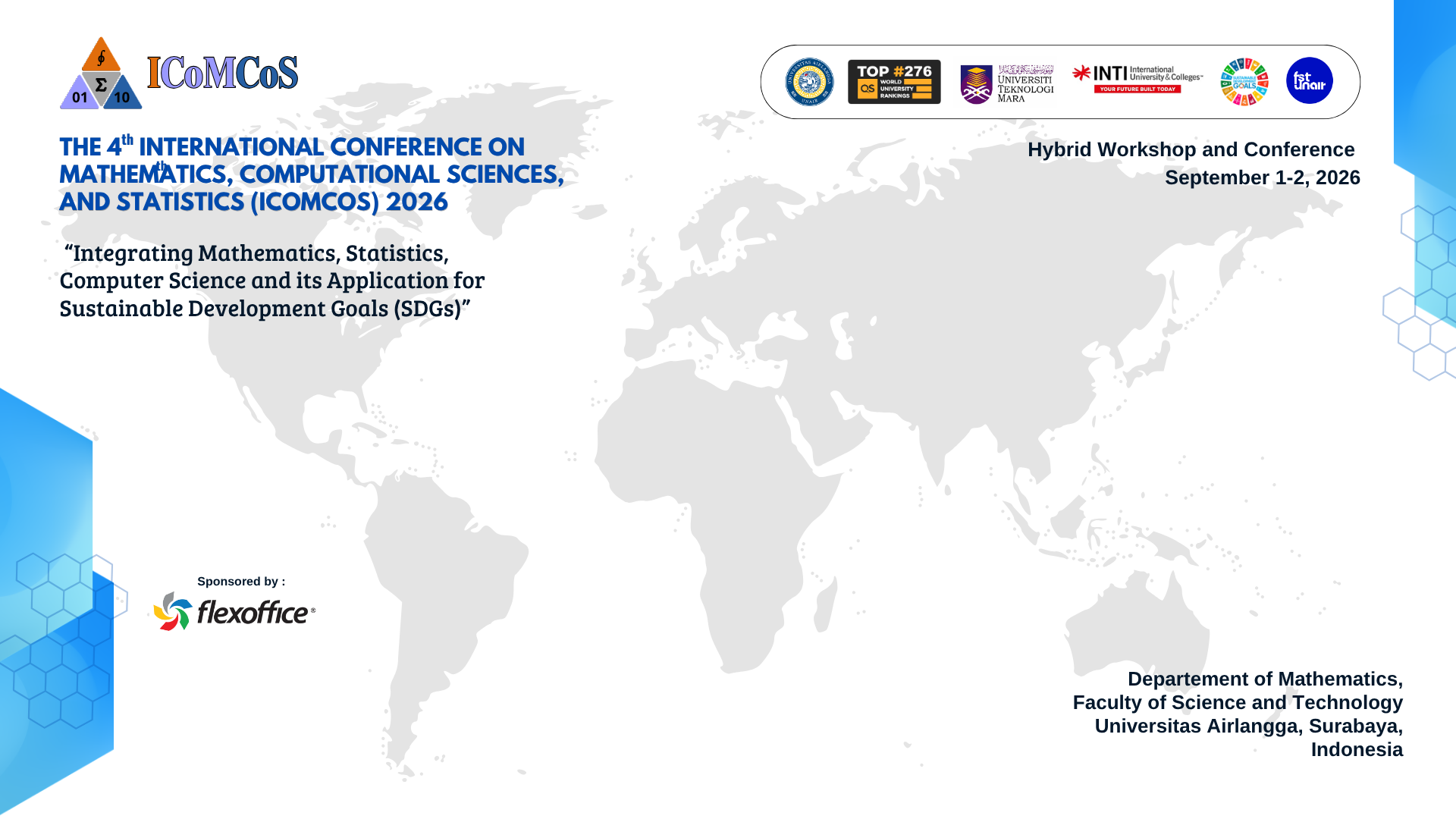
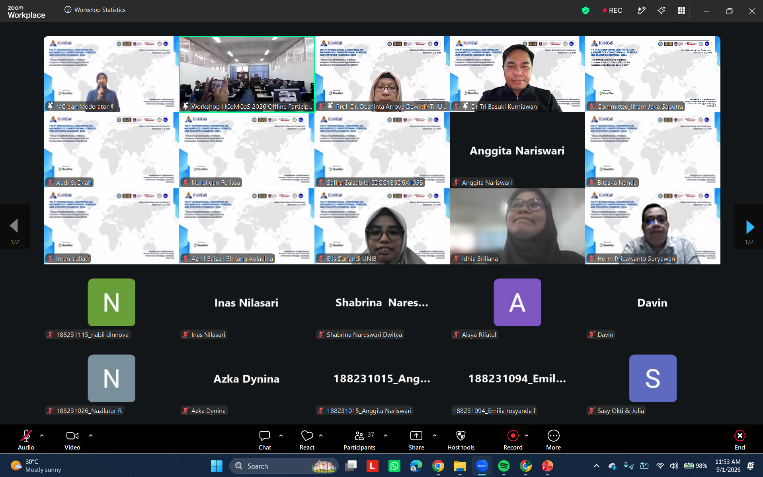
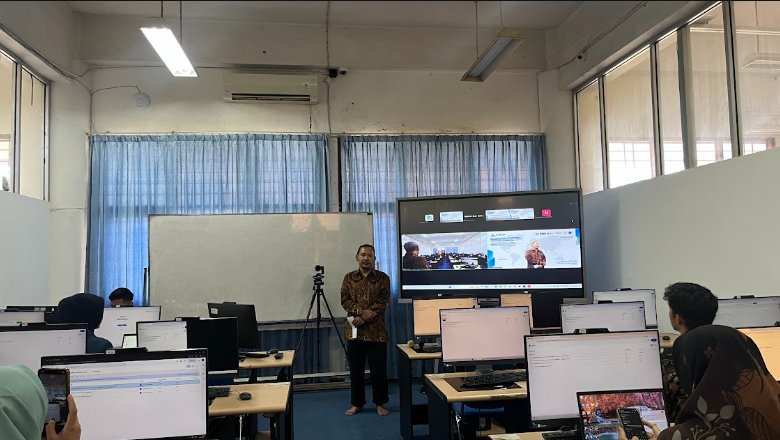
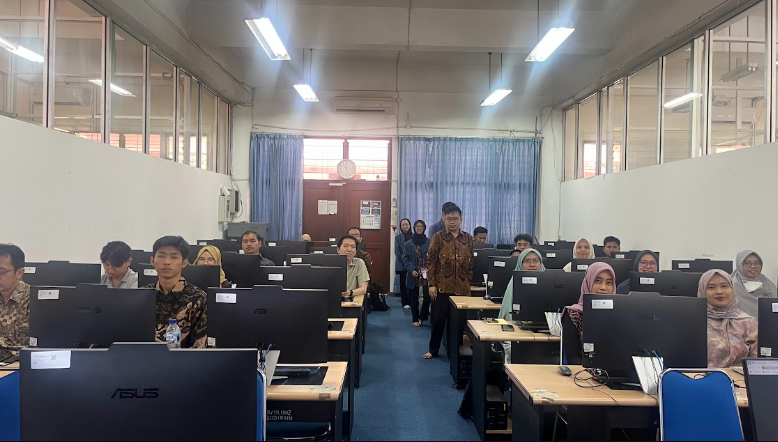
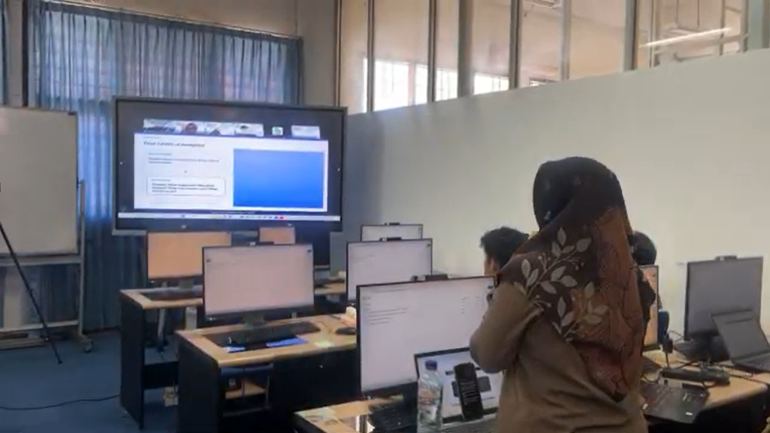
The Department of Mathematics, Faculty of Science and Technology at Universitas Airlangga held Workshop 1 as part of The 4th International Conference on Mathematics, Computational Sciences, and Statistics (ICoMCoS) 2026, themed “Data Analytics with Artificial Intelligence: Challenge and Opportunity as Impactful Solution.” The event took place on Tuesday, September 1, 2026, in a hybrid format combining an online session via Zoom Meeting with an in-person session held at LKMAT 6, Faculty of Science and Technology, Universitas Airlangga.
The workshop, which focused on the application of data analytics and artificial intelligence (AI), attracted 43 participants from diverse backgrounds, including students, lecturers, academics, and members of the general public, both from Indonesia and abroad. Participants registered as ICoMCoS 2026 conference presenters or attendees could join the workshop free of charge, while general participants were charged according to domestic or international rates.
Two International Experts as Speakers
The workshop featured two prominent speakers in the field of data analytics and AI:
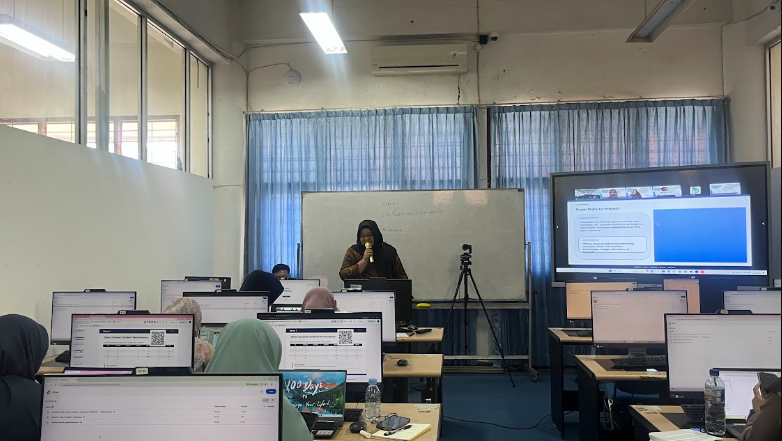
- Prof. Deshinta Arrova Dewi, an academic from INTI International University, Malaysia, who presented on “Data Analytics with Artificial Intelligence: Challenge and Opportunity as Impactful Solution.”
- Dr. Tri Basuki Kurniawan, from Universiti Kebangsaan Malaysia (UKM), who delivered a complementary session on the same theme, delving deeper into the technical aspects and practical implementation of AI in data analysis.
Event Schedule
The event opened with participant registration from 08:30 to 09:00 (local time), followed by an opening by the MC and a welcome address from Dr. Toha Saifudin, Coordinator of the Statistics Study Program at Universitas Airlangga, at 09:10. The first session, delivered by Prof. Deshinta Arrova Dewi, ran from 09:20 to 10:35, followed by a short break. The second session, led by Dr. Tri Basuki Kurniawan, took place from 10:45 to 12:00, before the event concluded at noon.
Key Takeaways from the Sessions
Throughout their presentations, the speakers highlighted several key points on the use of data analytics and AI:
- Data analytics and AI play a crucial role in transforming raw data into information, insight, predictions, decisions, and impactful solutions.
- There are four levels of data analytics that practitioners should understand: descriptive analytics, diagnostic analytics, predictive analytics, and prescriptive analytics.
- AI complements rather than replaces statistics. The integration of statistics, machine learning, and AI can accelerate the analytical process and generate more interactive insights.
- Generative AI, used as a data analysis assistant, can help practitioners understand datasets, identify missing values, discover patterns, suggest analytical methods, create visualizations, generate code, and explain results.
- The importance of practicing Responsible AI, particularly regarding data quality, bias, privacy, explainability, the risk of hallucination, and over-reliance on AI systems.
Hands-On Practice with Google Colab
Beyond the theoretical sessions, participants also gained hands-on experience analyzing data using Google Colab and a synthetic dataset. The practical exercises covered data cleaning, exploratory data analysis (EDA), data preparation, modeling, evaluation, and interpretation of results.
Supporting the Sustainable Development Goals (SDGs)
The workshop also contributed to several Sustainable Development Goals (SDGs), namely:
- Goal 4 – Ensuring inclusive and equitable quality education and promoting lifelong learning opportunities for all.
- Goal 9 – Building resilient infrastructure and promoting inclusive and sustainable industrialization that fosters innovation.
- Goal 17 – Strengthening global partnerships for sustainable development.
Through this workshop, organizers hope that the application of AI and data analytics will continue to be directed toward generating solutions with a positive impact across various fields, while contributing to the sustainable achievement of the SDGs.