
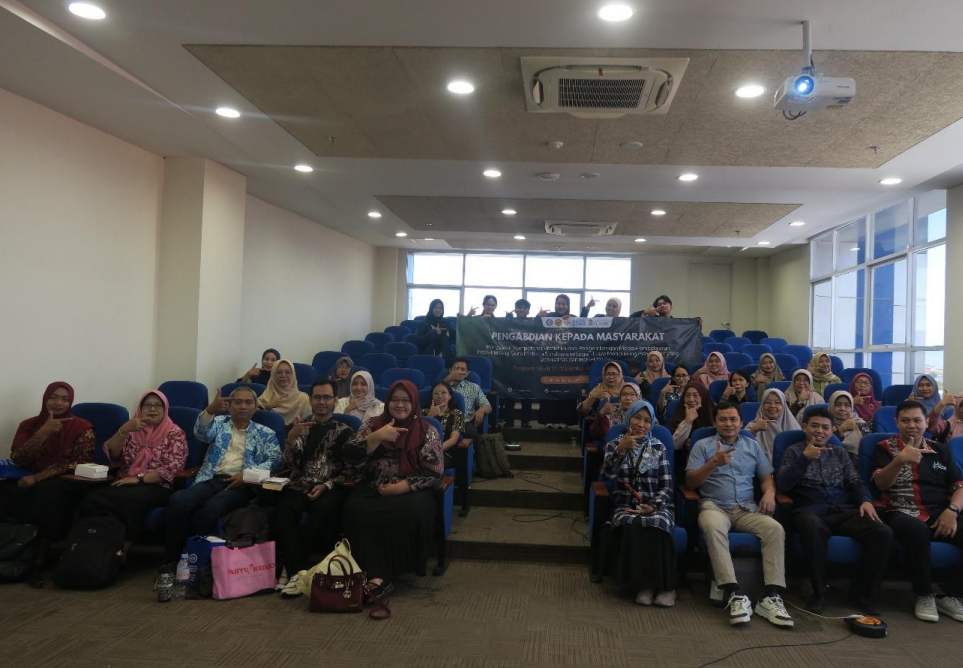
Surabaya – The Statistics Study Program of Universitas Airlangga (UNAIR), in collaboration with the Indonesian Teachers Association (Ikatan Guru Indonesia, IGI) of Surabaya City, held a community service program titled “Strengthening Statistical Competence and Developing Interactive Learning Media for IGI Surabaya Teachers to Support Quality and Sustainable Education.” The statistics training for teachers took place on Saturday, 12 September 2026, at the Joint Lecture Building (GKB) 3.10, Campus MERR C, Universitas Airlangga, and was attended by 35 teachers from IGI Surabaya.
Supporting SDG 4 through Teacher Capacity Building
The program is part of efforts to support SDG 4: Quality Education by improving the quality and capacity of educators, as well as SDG 17: Partnerships for the Goals. It is aligned with AIRLEARN (Airlangga Inclusive and Resilient Lifelong Education, Access, Resources, and Network), a program that promotes lifelong learning through open access to education, skills development, learning technology, and community education empowerment.
The activity also supports the School & Teacher Transformation Programme by strengthening the capacity of teachers and students, particularly in literacy and numeracy, STEM, and SDG-based education.
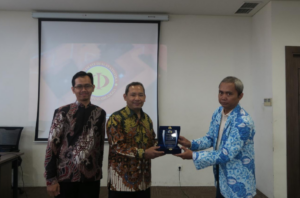
The program featured speakers Elly Pusporani, S.Si., M.Stat., Ir. Elly Ana, M.Si., and Firdha Dwishafarina Zainal, M.Si. It opened with remarks from the Head of the Community Service Committee, the Coordinator of the UNAIR Statistics Study Program, and the Chair of IGI Surabaya, followed by a plaque presentation.
Statistics Fundamentals and Hands-On Microsoft Excel Practice
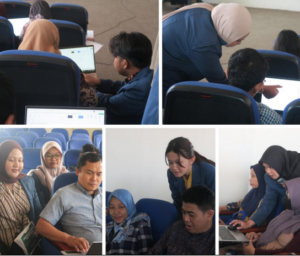
The program began with a pre-test, followed by sessions on the fundamentals of statistics and their application in education. Topics included types and scales of data, descriptive and inferential statistics, correlation analysis, and linear regression. Participants then reinforced their understanding through hands-on data processing and analysis using Microsoft Excel, helping them apply statistics more practically in a classroom context.
Interactive Learning in the Digital Era
In the next session, an education partner delivered material on interactive learning in the digital era, covering Social Constructivism, Cognitive Constructivism, and Active Learning. Participants were also introduced to learning activities such as discussions, Q&A sessions, quizzes, case studies, and interactive presentations.
The use of learning technology was introduced through platforms such as Nearpod, Pear Deck, and Kahoot, which can increase student engagement, provide real-time feedback, and create a more active and engaging learning process. The program concluded with a discussion, Q&A, post-test, evaluation, and awards for active participants.
Synergy between Universities and Teacher Organizations
Through this program, teachers are expected to apply the statistical knowledge and interactive learning strategies they gained in their classrooms. Its impact is expected to show in teachers’ improved ability to understand and apply statistics, and to design learning that is more interactive and relevant to students’ needs.
The program also reflects the synergy between higher education, teacher organizations, and education partners in strengthening teacher capacity and learning quality, contributing to SDG 4 through inclusive, quality, and sustainable education.